
Homes Not Hotels.
Preserve Lincolnville’s homes. Share its history. Respect its community.
Root & Simmer brings historical records and family memories together, helps homeowners document the stories behind their homes, and connects guests to Lincolnville with understanding and respect.
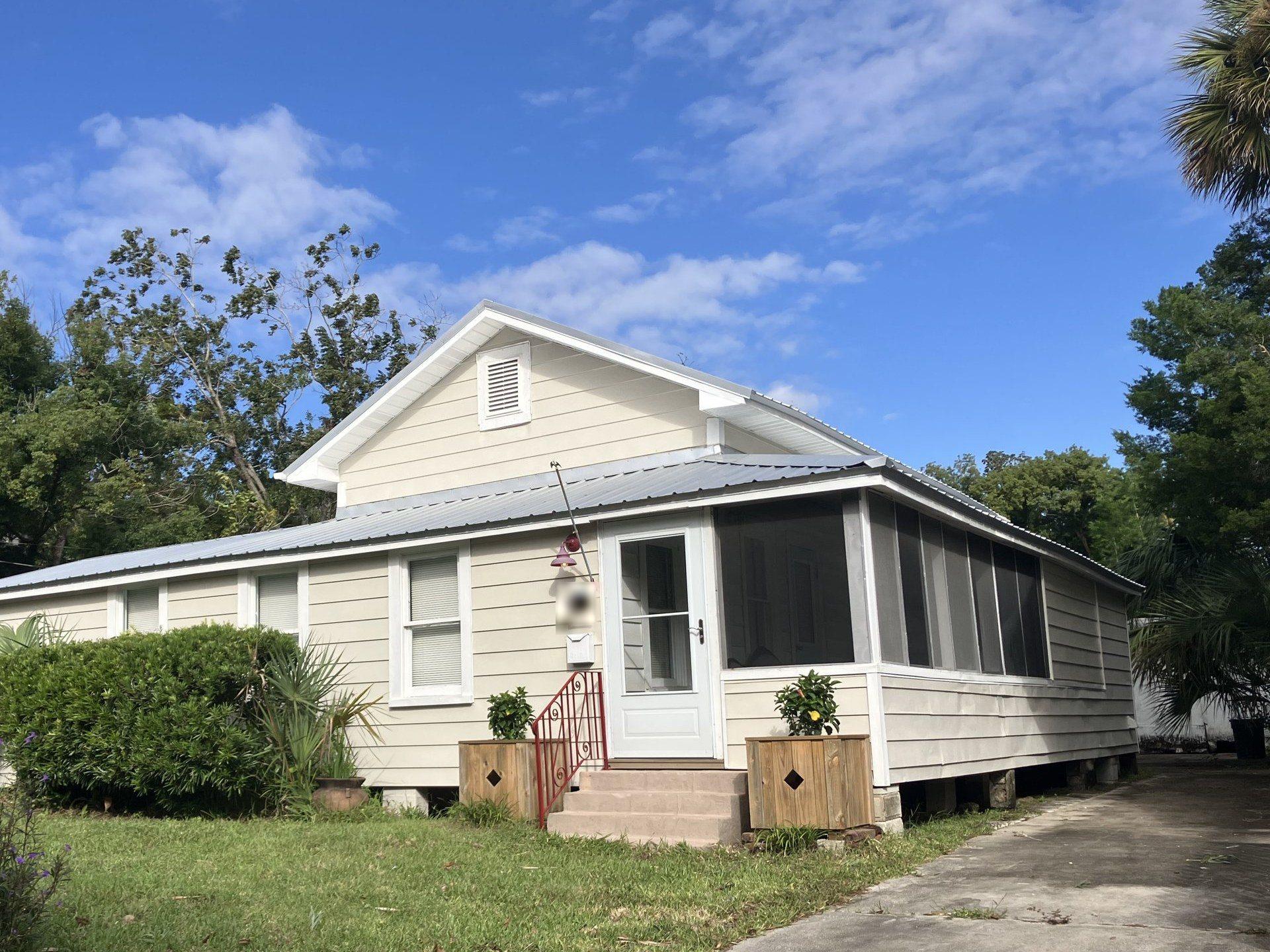
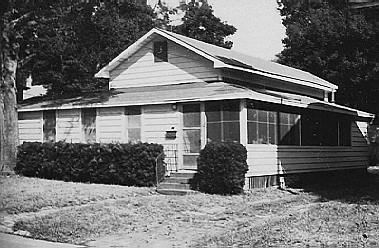
Preserve Lincolnville’s homes. Share its history. Respect its community.
What we hope to see: Homes remain homes. Residents remain at the heart. Guests leave with understanding and respect.
Read the proposal: Homes Not HotelsHomes Not Hotels, in numbers
One in four Lincolnville homes is now a registered vacation rental, and the Lincolnville Community Redevelopment Area has about seven years left before it sunsets on December 31, 2033. This page brings the facts into one place, so residents, owners, the City and the CRA can make choices together from the same clear picture.
It is offered in a spirit of collaboration. Many people have worked hard for Lincolnville since 2013, and real progress has been made. The aim is to build on that work and make sure long-term residents are heard before decisions are made, not after.
Root & Simmer is an independent business. Nothing here implies City or CRA endorsement.
Lincolnville by the numbers
175 of Lincolnville’s 685 residential properties (25.5%) hold at least one City-registered vacation rental. The neighborhood has 210 of the City’s 912 registrations (23.0%).
| Measure (as of October 22, 2026) | Count | Share |
|---|---|---|
| Residential properties in Lincolnville | 685 | 100% |
| Properties with a registered vacation rental | 175 | 25.5% |
| Vacation rental registrations in Lincolnville | 210 | 23.0% of the City’s 912 |
| Properties where the owner gets mail at the home (likely owner-lived) | 302 | 44.1% |
| Properties owned by an LLC, corporation or trust | 206 | 30.1% |
| Properties whose owner mails from outside Florida | 105 | 15.3% |
| Rental properties owned from outside Florida | 44 of 175 | 25.1% |
| Rental properties whose owner gets mail at the rental | 27 of 175 | 15.4% |
The heaviest rental streets are Riberia St (27 registrations), M L King Ave (18), Oneida St (18), Washington St (16), Sanford St (13) and Twine St (11).
How these were counted: rentals come from the City’s registry map. Properties and owners come from St. Johns County Property Appraiser parcel data for single-family, multi-family, mixed-use and condo parcels on Lincolnville’s streets. “Owner gets mail at the home” is a stand-in for owner-occupied, not an official homestead count.
The one-week rule: why rentals are being reported
In St. Augustine’s single-family zones, a home rented more than four times a year must be rented for at least a week at a time. A 6-night booking breaks that rule, and neighbors who know it are reporting those stays.
| Zoning district | Minimum rental stay | Rule |
|---|---|---|
| RS-1 and RS-2 (single-family) | 1 week, when rented more than 4 times a year | Ord. 2010-24, carried forward by Ord. 2019-51 |
| HP-1 (historic preservation) | 1 month | Ord. 1989-51, carried forward by Ord. 2019-52 |
| All other districts | No City minimum | Florida law bars new limits on rental length |
The City can enforce these minimums.
Florida law exempts local rules adopted on or before June 1, 2011, and both of these date from 2010 and 1989.
Most Lincolnville rental owners are not on site.
Of 175 rental properties, only 27 owners get mail at the rental, and 44 are owned from outside Florida. Booking sites let owners set any minimum stay, and many default to 2 or 3 nights. Owners who don’t know the City rule can break it without meaning to.
What it costs owners.
Complaints go to code enforcement, and the City can revoke a rental’s registration (City Code sec. 28-154). Owners also lose the shorter bookings they’ve already taken. The code sections reviewed do not state a fine amount.
What it costs neighbors.
Rules broken quietly mean more turnover on the block, and neighbors have to act as enforcers.
Background: the weekly and monthly rental minimums rest on older City rules (Ord. 2010-24 and Ord. 1989-51). Florida law lets cities keep limits on rental length adopted on or before June 1, 2011, but bars new ones (s. 509.032(7)(b), as quoted in SB 286, 2022).
The problems we share
The CRA has money and programs, yet homes keep passing out of long-term hands. The gap is in reach, timing and voice more than in funding.
Long-term homeownership is shrinking.
Black-owned homes in the tract that includes Lincolnville fell 45%, from 349 to 192, between 2009 and 2014 (Flagler Gargoyle). Today only 44% of properties have an owner getting mail at the home.
Rentals are concentrated and often remote.
One in four properties holds a registered rental. Of 175 rental properties, 44 (25%) are owned from outside Florida, and only 27 owners get mail at the rental.
The City’s tools are limited.
State law bars new limits on how long or how often a home is rented. The City can still require registration, safety inspections, parking, occupancy limits and a 30-minute response to complaints (City Code secs. 28-146 to 28-154).
Residents are not reliably in the room.
The Lincolnville CRA Steering Committee has five members. Budgets are decided at CRA meetings. No public count of resident attendance or comment was found, so no one can yet show whether participation is rising or falling.
Neighbors feel the pressure.
Residents have raised parking, noise, trash, demolitions and the loss of knowing their neighbors since at least 2018 (News4JAX 2018, 2019).
Where current trends point
If nothing changes, rentals could reach half of Lincolnville’s homes before the CRA’s funding ends on December 31, 2033. These are scenarios built from the facts above, not forecasts.
Rentals.
Citywide registrations rose from more than 400 in 2019 to 912 in 2026, roughly doubling in seven years. If Lincolnville followed that pace for the next seven years, rental properties would rise from 175 (25%) to around 350 to 400, which is half or more of the neighborhood’s 685 homes.
Ownership.
The 2009 to 2014 drop in Black-owned homes (45% in five years) shows how fast change can move.
What protects a Lincolnville home
Repair help is narrow.
Fix-It-Up covers health and safety repairs for income-qualified owners who live in the home (homesteaded). There is no funding for investors providing low-income housing. An investor-owned or vacant house has no repair program behind it.
Full demolition needs approval.
Any building 50 years old or older, anywhere in the city, needs a Certificate of Demolition from the Historic Architectural Review Board (HARB) after a public hearing, whatever its location, significance or design.
One exception.
Some privately owned single-family homes in a flood zone may skip HARB demolition review if the owner documents the floor elevation with a sealed survey or elevation certificate.
Partial demolition review.
Removing or replacing significant exterior features (roofs, windows, exterior finishes, porches, foundations) is reviewed for designated or contributing buildings, including outside the HP-1 to HP-5 zones. Minor matching repair, such as re-roofing, is not covered. Noncontributing buildings get no partial demolition review.
Status can be lost.
A contributing building that is significantly altered or demolished is no longer counted as designated, and a National Register district should keep at least 51% historic buildings.
Listing alone doesn’t protect.
National Register listing by itself doesn’t stop a private owner from demolishing. Protection comes through the City’s local review: HARB must approve full demolition of any building 50 years or older, and partial demolition of designated or contributing ones.
Owners can protect a home themselves.
An owner can ask HARB for Local Historical Landmark status. One St. Augustine home was designated at its owner’s request so a future owner could not tear it down.
Incentives exist.
Designated or contributing buildings can qualify for the City’s property tax (ad valorem) exemption for qualified rehabilitation and the Federal Preservation Tax Credit. The City also named local programs such as the Lincolnville CRA for eligible owners.
Digging brings review.
Work that disturbs soil more than 3 inches deep over 100 square feet may need archaeological review first.
Residents named these risks in 2016: demolition by neglect; fines too low to deter demolition (a $5,000 fine was said not to discourage it); Lincolnville’s Victorian-era housing fabric eroding; no design review in Lincolnville; and a need to educate new owners and “flippers.” These were public comments, not City findings.
Sources: City of St. Augustine Registered Short Term Rentals map, registry data pulled October 22, 2026; St. Johns County parcel data (Property Appraiser owner and land-use records), pulled October 22, 2026; City Code Chapter 28, Division 2, Vacation Rentals (secs. 28-145 to 28-158); Flagler College Gargoyle, April 10, 2016; News4JAX, January 9, 2018 and June 10, 2019; Florida s. 509.032(7)(b), as quoted in SB 286 (2022); City letter to historic property owners, Aug 21, 2023; City HARB page; Historic Preservation Officer interview, May 2022; Historic Preservation Master Plan workshops, fall 2016, and public forum, May 19, 2016.
This page is informational and is not legal advice.