
What if…? · A Root & Simmer vision
Washington Street, Lil Africa’s Main Street
Washington Street is our spine. Lil Africa is our heartbeat. And the people of Lincolnville are its living story.
A century ago, Washington Street was Lincolnville’s Main Street. Residences shared the street with shops, churches and fraternal halls, and many buildings joined home and livelihood under one roof: the business downstairs, the family upstairs. Grocers, barbers, cafés, druggists, doctors and dentists served the neighborhood that built them. What if Washington Street, and the blocks around it, did that again?
A vision for local businesses that serve the community first, the way Lil Africa’s did. Root & Simmer helps neighbors start and grow them: we take no part in buying, selling or leasing property.
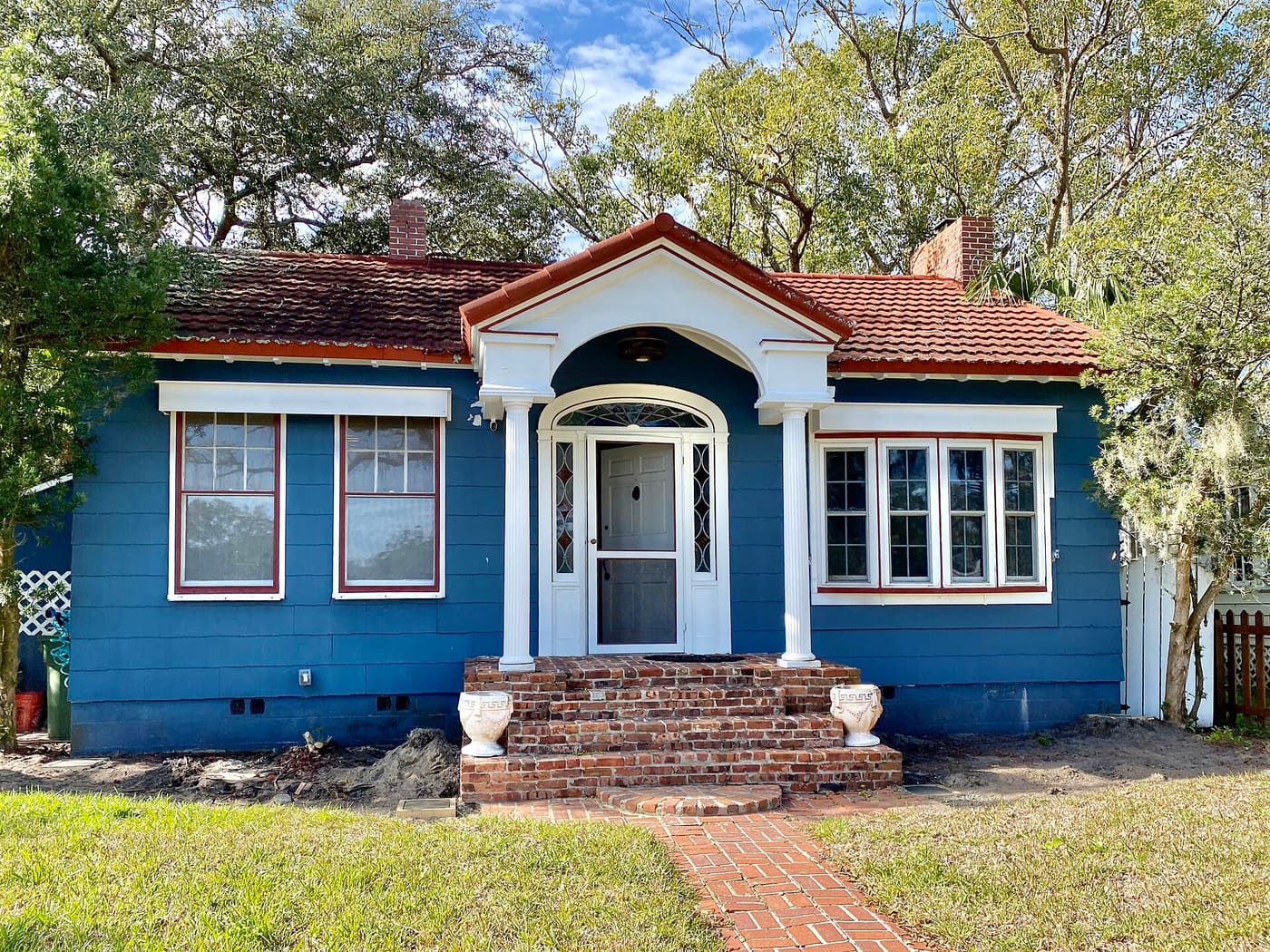
This is how it should feel
You walk Washington Street on a weekday morning and the neighborhood is open for business. The barber has the chair turned toward the window. The grocer on the corner has fresh bread and the things you ran out of, so nobody has to drive across town. There’s a café with a table for the elders and a counter for the young people, a small office where someone will help you with your insurance or your taxes, and upstairs, families who live above the shops they run. On Friday night the old hall fills again for music and dancing, the way it did in the 1920s.
We don’t want to build something new on top of Lincolnville. We want to bring back the kinds of businesses that once served it, owned by and serving the people who live here.
What should open on the street?
Each card is a business Lil Africa once had. Tap the ones you would use today, then tell us what else is missing. Your picks tell would-be owners what the neighborhood will support.
Add your voice
0 picks
Your picks above come with this note. Tell us what business you wish were here, what worries you, and what your family remembers.
Washington Street then
- 70 Washington
- Built 1885-1893. A dry-goods store with a two-story front porch on the 1893 Sanborn map. Merchants Moses and Ike Kukowsky worked and lived here in 1904; later came Albert Natiel’s restaurant, Dr. Thomas G. Freeland’s medical office, Holmes and Johnson Funeral Home and Judson Ayers’s dry goods.
- 64 Washington
- Ernest Wells’s Royal Palm Barber Shop and Chris Lightburn’s grocery. During and after the 1964 demonstrations, the Florida headquarters of the Southern Christian Leadership Conference, run by nurse Loucille Plummer (ACCORD).
- 92 Washington
- The Odd Fellows Hall, 1908. Its first floor became the Lincolnville Theatre. A Richard Twine photograph shows residents gathered after a dance there in the 1920s.
- 87 Washington
- Frank B. Butler opened the Palace Market here in 1914.
- 76 Washington
- The local NAACP office, from the 1970s until the early 1990s (ACCORD).
- 93 Washington
- Built 1871-1885 by the 1991 National Register inventory: among the oldest buildings on the street.
Addresses are today’s. Historic directories used older numbers in places, so each early business is matched to a building only when the records agree.
In the city directories
| No. (number of its time) | Who | Year | Label |
|---|---|---|---|
| 62 | H. W. Martin, restaurant (home 73 Lincoln) | 1899 | Directory entry |
| 66 | Charles T. Evans, barber (home 88 St. Francis) | 1907 | Directory entry |
| 68 | Andrew Huff, embalmer at W. F. Macon & Co., home | 1911-12 card | Directory entry |
| 84 / 86 | Domingo M. Papy, home (84); insurance and notary public (86) | 1911-12 card | Directory entry |
| 101 | Matt Higdon, barber | 1899 | Directory entry |
| 142 | Rev. M. D. Certain, pastor, St. Paul A.M.E. Church | 1899 | Directory entry |
Directory numbers are the numbers of their time and may not match today’s. The 1899 entry at 142 is earlier than the building the 1991 list dates there (1917-1924).
Help us rebuild 1920s Washington Street
We hold directories from 1885, 1899, 1907 and 1911-12, but not yet a 1920s directory. If you have one, or Sanborn map sheets, census pages or family memories of the shops, churches and gathering places on Washington Street, please write to rootnsimmer@gmail.com.
Where things stand
- What residents need
- The City’s 2013 Lincolnville Redevelopment Plan found that “residents have to leave Lincolnville for nearly all goods and services,” and that they favor businesses “of neighborhood type and scale.”
- What the City recommends
- A neighborhood business and service center along M.L. King Avenue from about Bridge Street to Lovett Street, centered on the Excelsior building, with a section of Washington Street designated for commercial land use.
- What stands
- Washington Street’s historic buildings: homes, churches, the Odd Fellows Hall and the old storefronts of the Lincolnville Historic District.
- What’s next
- Listening first: asking Washington Street residents and business owners what they want and where they need support.
Local first. Neighborhood scale. Historic buildings kept. Owners decide what happens to their own property; Root & Simmer takes no part in any sale or lease.
Washington Street’s history
Walk the street as it was between 1885 and 1912, see who lived and worked at each address, and follow the research behind each building.
Historical Walking TourWashington Street Then & NowHistoric Residents Map (members)
The Historical Walking Tour guide is for ROOT Members and walk-code holders. Without access, the button takes you to the Walks page, where members sign in and guests enter a walk code. The Historic Residents Map is for members.
The concerns, and how we can help
- Residents leave the neighborhood for everything
- A list of the businesses neighbors say they would use, from this page, for anyone ready to open one, so the first shops are the ones Lincolnville needs.
- Keeping it neighborhood scale
- The City’s plan favors businesses “of neighborhood type and scale.” We point new owners to small, local, home-and-shop models, not chains.
- Protecting historic buildings
- We pull each building’s records, explain the HARB rules, and help owners with the forms before any change.
- Forms and permits for new businesses
- We gather what a new owner needs: zoning, business tax receipts, permits and HARB applications, explained in plain words.
- Telling the street’s history right
- Every business named comes from a record: the 1991 National Register, ACCORD’s markers, Sanborn maps and the city directories.
Open, grow or remember a business
Dreaming of a shop, already running one, or carrying your family’s business story? Tell us. We help with the forms, the records and the story.
The records behind the idea
Every fact on this page comes from a public record. Here they are, with what each one says in plain words.
- Open the document: Lincolnville Redevelopment Plan, 2013: neighborhood businesses and services (opens in a new tab)
Lincolnville Redevelopment Plan, 2013: neighborhood businesses and services
City of St. Augustine, pages 24-25
“Residents have to leave Lincolnville for nearly all goods and services.” The plan names a small grocer, bakery or coffee shop, deli, beauty or barber shop, and “shops and service establishments representative of those in Lincolnville in the past.”
- Open the document: Lincolnville Redevelopment Plan, 2013: Washington Street’s commercial section (opens in a new tab)
Lincolnville Redevelopment Plan, 2013: Washington Street’s commercial section
City of St. Augustine, page 28
The plan points to “the section of Washington Street designated for commercial land use” for new uses of large historic buildings.
- Open the document: Lincolnville Redevelopment Plan Amendment, 2017 (opens in a new tab)
Lincolnville Redevelopment Plan Amendment, 2017
City of St. Augustine
The CRA’s goals: preserve African American heritage and retain long-term residents, preserve historic character, and make neighborhood improvements.
- Open the page: Historic Architectural Review Board (HARB) applications (opens in a new tab)
Historic Architectural Review Board (HARB) applications
City of St. Augustine
Washington Street is inside the Lincolnville National Register Historic District. Storefront changes, signs and new buildings may need HARB review; we help owners find the right application.
How Root & Simmer helps
Root & Simmer Hospitality Co. is here to support the Lincolnville Community Redevelopment Agency (CRA) and the neighbors it serves, with a service that answers the CRA’s own concerns. We do not bid on City work or manage City property. We do the groundwork that helps good decisions get made.
Get the forms and records
We request and gather every City, County and State record and form a project needs: permits, Historic Architectural Review Board (HARB) files, property records, maps, minutes and budget pages.
Explain them in plain words
We read the records and write the narrative: what the data shows, what it leaves open, and what it means for the people who live here, with every source named.
Preserve history and homes
We research and record the story of each place and the families connected to it, so that history is kept and the homes still standing stay standing.
Support the CRA – Lincolnville
We bring neighbors’ voices, verified history and volunteer hands to the CRA’s work, and we help answer the questions the CRA and the City are asking.
Root & Simmer Hospitality Co. is an independent private business. This is a community vision for discussion. It is not a City of St. Augustine or Lincolnville Community Redevelopment Agency (CRA) plan and implies no City endorsement. Root & Simmer takes no part in buying, selling, renting or leasing property.
Our other visions: What if…? The Stable Bodega · What if…? Twine Park · Bringing Lincolnville onto the Visitor Map